
Organizational Structure
Transparent Governance • Academic Leadership • Student-Centric Administration
The Organizational Structure of MITRC Engineering College typically follows a hierarchical framework that facilitates efficient management and administration.
Governance Overview
The Organizational Structure of MITRC Engineering College typically follows a hierarchical framework that facilitates efficient management and administration. While specific details can vary, here's a generalized outline of how such an institution might be structured:
Visual Hierarchy
Sequential chain of governance from governing bodies to campus stakeholders.
Chair Person
Board of Governors
Advisory Council
Director
Division Functionaries
Building & Work Functionaries
Financial Functionaries
Stake Holders
Leadership & Functional Bodies
Board of Governors
At the apex of the governance structure is the Board of Governors of the All India Arya Samajis Society, chaired by Mrs. VIMLA DEVI. This esteemed board is entrusted with making high-level policy decisions and guiding the institution's strategic direction. The board comprises distinguished members from academia, industry, and the community, ensuring a well-rounded and visionary leadership.
Advisory Council
The Advisory Council of MITRC serves a crucial role in providing strategic guidance, industry insights, and overall support to enhance the institution's educational quality and relevance. Members of the Advisory Council are selected based on their expertise, influence, and ability to contribute meaningfully to the college's goals. Industry Leaders, Academicians, Alumini are the members of Advisory Council.
Director
Our Director Dr. S K SHARMA is the overall head of the institution. He is responsible for the strategic direction, academic leadership, and general administration of the college.
Deans
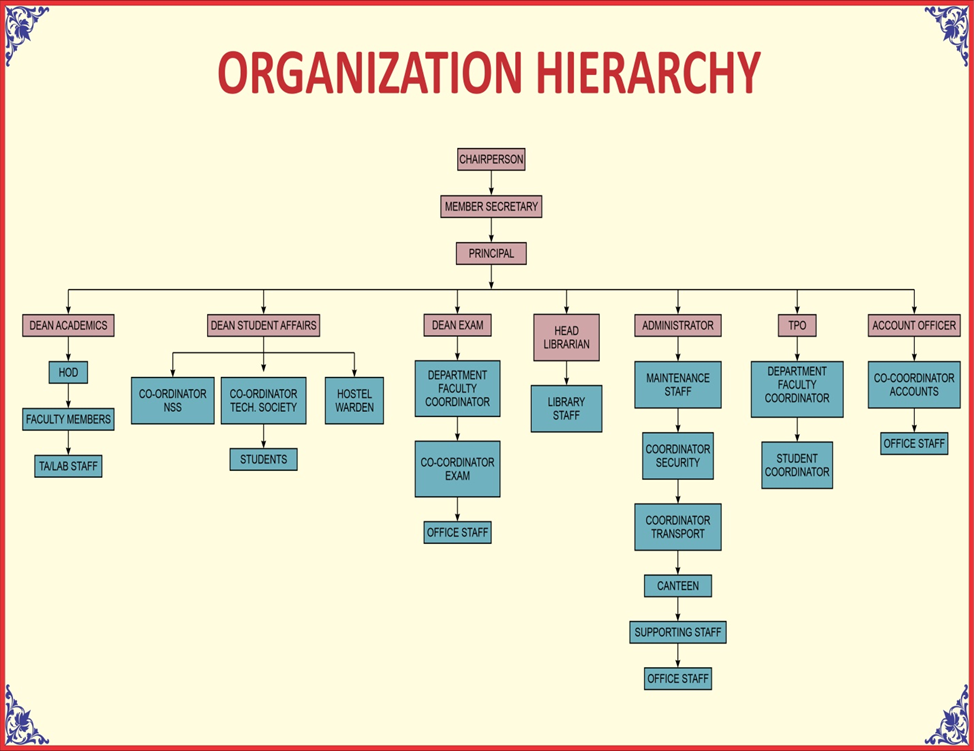
Different faculties within the college may have their own deans (e.g., Dean of Academics, Dean of Exam, Dean of Student Affairs). Deans oversee academic programs, faculty appointments, conduction of exam, research initiatives, and student affairs within their respective departments.
Heads of Departments (HoDs)
Each academic department (e.g., Various Departments like Artificial Intelligence, Civil Engineering, Computer Science, Electrical Engineering, Mechanical Engineering, Applied Science & Business Admistration within the college.) is typically headed by a Head of Department. HoDs manage the day-to-day operations of their departments, including curriculum development, faculty recruitment, and student supervision, academic excellence, activities to enhance skills, discipline and student performance.
Faculty
Faculty members are responsible for teaching, research, and academic advising. They contribute to curriculum development, conduct research, and often engage in academic and professional development activities.
Administrative Staff
The administrative staff includes professionals who manage various non-academic functions such as admissions, finance, human resources, facilities management, public relations, and student services.
Support Staff
Support staff includes personnel involved in maintaining facilities, providing technical support (e.g., laboratory assistants), security, and other operational roles essential for the smooth functioning of the college.
Students
Students are an integral part of the organizational structure, although not in a formal administrative sense. They participate in academic activities, student organizations, and contribute to the vibrant campus life.
Organizational Chart (Image)
Official institutional organization and reporting hierarchy
Governance at MITRC
Guided by visionary trustees, eminent advisory members, and experienced academic leadership.